AI Meeting Tools Move Past Transcripts Into Full Workflow Automation
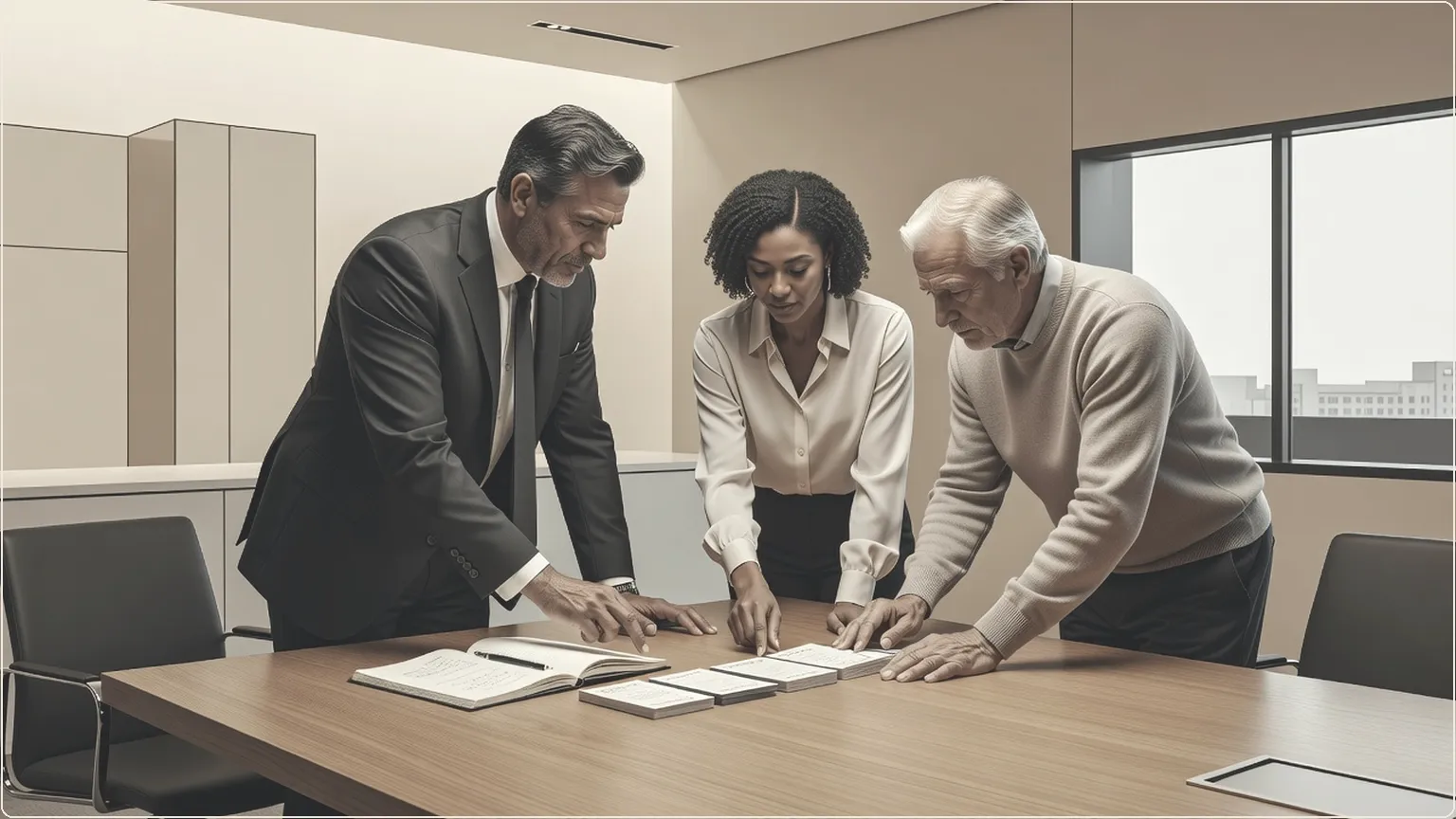
AI Meeting Tools Move Past Transcripts Into Full Workflow Automation
Fireflies, Fathom, and tl;dv are no longer competing on transcription accuracy alone — that's assumed table stakes now. The 2026 comparisons show Fathom leading G2 ratings (5.0/5) with a generous free tier for Zoom and Meet, while Fireflies has doubled down on CRM integrations for sales teams, pushing updates straight into Salesforce and HubSpot at $18/user/month [1][2][3].
The bigger trend: these tools now auto-generate action items, synthesize transcripts using models like Claude, and push structured updates into Slack and CRMs without manual copy-pasting [2]. Bot-free, privacy-conscious recording is also becoming a differentiator as teams grow wary of yet another silent participant joining every call [1].
Practical takeaways are circulating widely on X, with users reporting real productivity gains once meeting notes stop being a static artifact and start triggering downstream actions automatically [3].
OpenMOSS Ships a Single-Pass Model for Transcription and Speaker Diarization
Released July 9, OpenMOSS's MOSS-Transcribe-Diarize is a compact 0.9B parameter model that does transcription, speaker diarization, timestamps, and acoustic event detection in one pass — no separate ASR-then-diarization pipeline required [1]. Early benchmarks show strong word error rates and diarization accuracy for long-form, multi-speaker audio like meetings and podcasts [1][2].
It's already available in GGUF and MLX formats for on-device use, meaning smaller teams and privacy-sensitive setups can run capable speaker-aware transcription locally rather than routing audio through a cloud pipeline [2]. Early testers on X are positive about real-time performance in multi-speaker scenarios, noting the efficiency gain over stitching together separate models [3].
This matters more than it looks — single-pass diarization at this size signals that "who said what" is becoming a commodity capability, pushing the real competition further up the stack into synthesis and retrieval.
Karpathy-Style "Second Brains" Push Knowledge Systems Beyond Chat
A growing cluster of builders is applying Andrej Karpathy's LLM wiki methodology to personal knowledge management, using Claude Code inside Obsidian to ingest, structure, and synthesize information into compounding knowledge bases rather than one-off chat sessions [1][2][3]. Plugins are emerging that add autonomous research loops, hot caching, and self-organizing folder schemas on top of standard vaults [2].
The philosophical shift is the interesting part: this is AI positioned for long-term knowledge compounding, not conversational assistance. Builders on X are sharing vault structures explicitly designed to outlast any single chat thread, treating the knowledge base itself as the durable asset [3].
It's a DIY preview of what meeting intelligence platforms are trying to productize at scale — structured, retrievable, ever-growing personal or team knowledge, built automatically instead of by hand.
What This Means For Your Meetings
Put these four stories together and the shape of 2026 becomes clear: the pipeline from "audio in a room" to "answerable knowledge base" is being commoditized layer by layer. Diarization and transcription are becoming near-solved problems, as OpenMOSS's single-pass model shows. Meeting tools like Fireflies and Fathom have moved past notes into automated workflows. And underneath it all, RAG and vector search have become the standard way any of this gets made queryable and useful later.
The Karpathy-style second brain trend is the tell — smart individuals are already hand-building what Proudfrog aims to deliver natively: a knowledge graph that compounds over time, not a folder of disconnected transcripts. The lesson from that community is that raw capture isn't the bottleneck anymore; structuring, synthesis, and retrieval are where the real value sits. A meeting transcribed perfectly but never connected to your last twelve conversations with that client is just a longer document, not intelligence.
For teams evaluating meeting AI tools right now, the practical filter has shifted: don't ask "how accurate is the transcript," ask "can I ask this system a question across six months of meetings and get a grounded answer." That's the RAG-and-vector-database story landing directly on your calendar.
Key takeaway: Transcription is solved — the real competitive edge in 2026 is whether your meeting history becomes a retrievable, compounding knowledge base or just an archive of files nobody reopens.
Sources
- https://medium.com/@pratik-rupareliya/top-15-vector-databases-in-2026-a-production-decision-guide-from-100-enterprise-deployments-dd58a04f51a5
- https://aciinfotech.com/blogs/vector-database-strategy-the-key-to-ai-success-in-2026
- https://dev.to/soumia_g_9dc322fc4404cecd/rag-and-vector-databases-should-you-actually-care-in-2026-lll
- https://get-alfred.ai/blog/best-ai-meeting-notetakers
- https://zackproser.com/blog/best-ai-meeting-notes-tools-2026
- https://www.read.ai/articles/best-ai-meeting-assistants
- https://huggingface.co/OpenMOSS-Team/MOSS-Transcribe-Diarize
- https://huggingface.co/cstr/MOSS-Transcribe-Diarize-GGUF
- https://x.com/MosiAI_Official/status/2075059157443756245
- https://aimaker.substack.com/p/llm-wiki-obsidian-knowledge-base-andrej-karphaty
- https://agricidaniel.com/blog/claude-obsidian-ai-second-brain
- https://medium.com/@evgeni.n.rusev/how-i-built-my-second-brain-with-obsidian-claude-code-9fb54b7665ca
Get the daily briefing
AI, knowledge graphs, and the future of work — in your inbox every morning.
No spam. Unsubscribe anytime.