Fireflies' AskFred Turns Months of Meetings Into a Queryable Archive
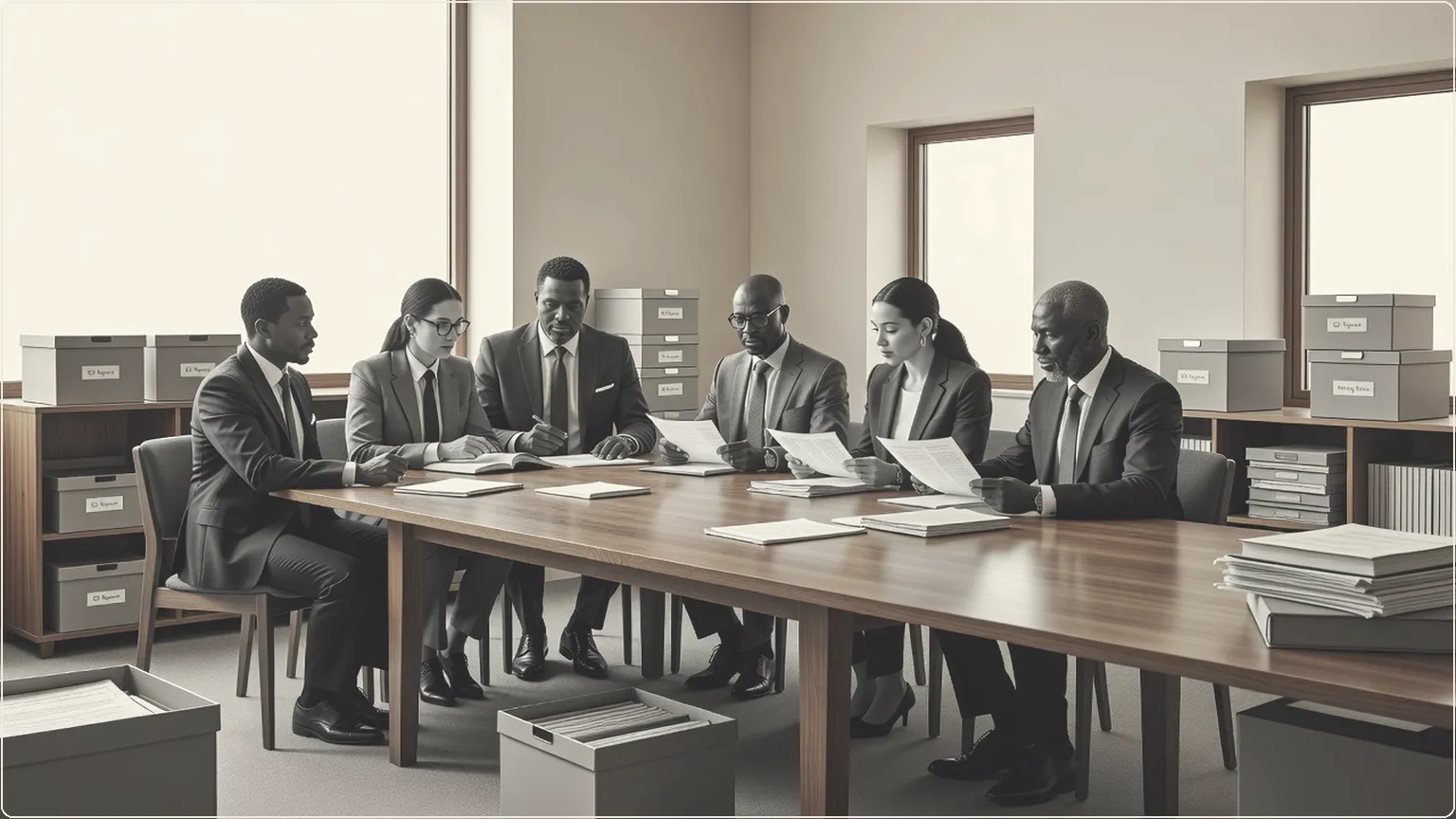
Fireflies' AskFred Turns Months of Meetings Into a Queryable Archive
Fireflies.ai has pushed further into retrieval with AskFred, a natural-language layer that lets you query across your entire meeting history — not just one transcript — for summaries, action items, trends, and decisions [4]. It supports filtering by date range and participant, plus web search integration, and works both in the dashboard and via API with threaded follow-ups for context [5].
The notable bit is the "global" mode: instead of treating each meeting as an island, AskFred lets you ask a question like "what did we agree with this vendor last quarter?" and get an answer stitched together from meetings you'd otherwise have to hunt through manually [6]. That's a meaningful step beyond simple transcript search.
Productivity-focused users on X are already using it to reconstruct decision trails buried across months of calls, and several workflow roundups now list Fireflies alongside broader agent stacks rather than as a standalone notetaker — a sign the category is merging with general knowledge-work tooling.
Graph RAG Proves Its Worth for Multi-Hop Meeting Questions
A 2026 NICD benchmark delivered a striking number: Graph RAG systems answered 65.3% of complex, multi-hop questions correctly versus just 28.9% for vector-only RAG, and were roughly 80% more truthful overall [7]. Microsoft's hierarchical GraphRAG approach reportedly hit 86% accuracy in enterprise tests against a 32% vector baseline [8].
The reason matters for anyone building on top of meeting data: vector search is good at "find the passage that sounds like this," but bad at "connect what was said in three different meetings across two months to answer one question." Graph structures — entities, relationships, explainable paths — are what make that kind of reasoning possible, which is why practitioners increasingly recommend hybrid vector-plus-graph setups rather than picking one [9].
AI builders on X are framing this as the difference between a chatbot with a search box and something closer to actual institutional memory, especially for agent systems that need to reason over long, messy conversation histories rather than clean documents.
Google Workspace Bets on Agentic Gemini for Executive Workflows
Google is pushing Gemini deeper into daily execution rather than just drafting. A September 24 post recommends five starter agents for executives, including a "Sentiment Analyst" for reading meeting tone and a Daily Briefing Agent that summarizes what matters before you start your day [10]. A September 9 update detailed cross-app task automation spanning Gmail, Drive, and Docs via "Workspace Intelligence" [11].
Gemini is also connecting outward — integrating with third-party tools like Salesforce through MCP, so agents can act across a company's actual toolchain rather than staying siloed in Workspace [12]. The framing throughout is unambiguous: less manual synthesis, more automated follow-through for people who sit in back-to-back meetings all day.
Enterprise commentators on X see this as Google finally shipping the "boring but useful" agentic features people actually asked for, rather than flashy demos — a pattern echoing across the broader productivity AI market this year.
What This Means For Your Meetings
Today's stories all point the same direction: capturing a meeting is table stakes now; the value has shifted entirely to what happens after the call ends. Whether it's Granola's citation-backed team chat, Fireflies' cross-meeting AskFred, or Google's sentiment-reading agents, every major player is racing to answer one question — can you actually find and reason over what was said six weeks ago, across a dozen conversations, without manually digging through transcripts?
The Graph RAG research is the quiet story that explains why the others are moving the way they are. Simple transcript search was always going to hit a ceiling once you have hundreds of meetings in your history — multi-hop questions ("what did we promise this client, and did it change after the roadmap meeting?") need relationship-aware retrieval, not just semantic matching. That's precisely the architecture bet Proudfrog has made with its knowledge graph approach: speaker-attributed, entity-linked memory that gets more valuable, not more cluttered, as your meeting history grows.
The bot-vs-no-bot debate and the Google agent push both matter too, but mostly as context — they're solving capture and task automation, while the harder unsolved problem is durable, explainable retrieval across a real archive of work knowledge. That's where the next round of competitive differentiation will actually happen.
Key takeaway: The AI meeting tools race has moved past "who transcribes best" to "who lets you actually think across your entire meeting history" — and graph-based retrieval, not bigger vector indexes, is what's winning that fight.
Sources
- https://www.usecarly.com/blog/granola-vs-otter/
- https://www.granola.ai/blog/two-dot-zero
- https://bestautomationtools.ai/reviews/granola-review/
- https://guide.fireflies.ai/articles/1102961402-how-to-use-askfred-to-search-and-get-answers-from-all-past-meetings
- https://docs.fireflies.ai/askfred/overview
- https://guide.fireflies.ai/articles/6556345325-askfred-get-answers-from-a-specific-meeting-in-fireflies-and-get-answers
- https://neo4j.com/blog/agentic-ai/vector-rag-vs-graphrag/
- https://www.tigergraph.com/blog/graphrag-vs-vector-rag/
- https://usewire.io/blog/knowledge-graphs-vs-rag-when-graphs-win/
- https://workspace.google.com/blog/future-of-work/the-5-ai-agents-i-tell-every-executive-to-build-first
- https://workspace.google.com/blog/product-announcements/less-switching-more-flow-5-new-agentic-capabilities-across-google-workspace-apps
- https://workspaceupdates.googleblog.com/2026/09/connect-to-more-tools-with-gemini-in-google-workspace.html
Get the daily briefing
AI, knowledge graphs, and the future of work — in your inbox every morning.
No spam. Unsubscribe anytime.