Granola and Fathom Ditch the Bot, Go Native
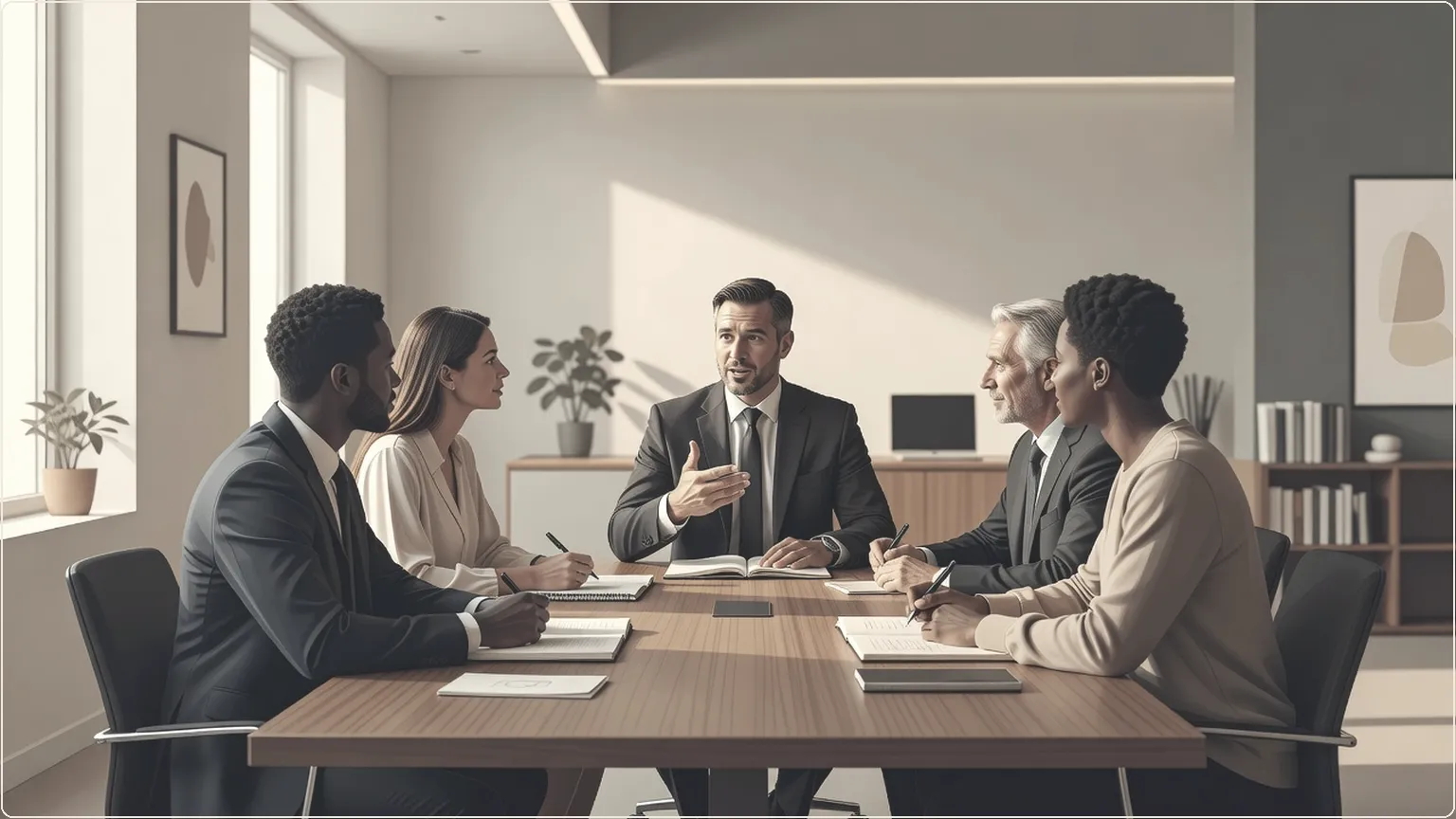
Granola and Fathom Ditch the Bot, Go Native
Two of the sharper players in meeting notes made moves this month that point at the same conclusion from different angles: the visible "bot joins your call" pattern is on its way out. Granola captures audio directly from your device — mic and speakers — across Zoom, Meet, Teams and beyond, blending it with your own typed notes into structured summaries and action items, all while staying SOC 2 Type II compliant and private by default [4]. No bot icon, no awkward "recording started" announcement.
Fathom, meanwhile, shipped an iOS app in October 2026 that captures in-person meetings straight from your iPhone mic, generating instant summaries and action items and syncing them into your full meeting history on mobile — free plan included, with unlimited capture and transcription [5][6]. That's a meaningful expansion beyond the video-call use case into hallway conversations, client lunches, and conference-room meetings where nobody's screen-sharing anything.
The reaction across the community has been consistently positive: bot-free, device-native capture feels more natural, less performative, and better aligned with how people actually meet — including the growing share of meetings that still happen in person.
RAG-Anything Open-Sources the Plumbing for Multimodal Knowledge Graphs
HKUDS's RAG-Anything, built on top of LightRAG and released under MIT license, has quietly become one of the more important open-source building blocks for serious retrieval-augmented generation [7]. It parses text, images, tables, charts, and even mathematical equations out of documents, then constructs dual-graph knowledge representations that link entities across modalities — followed by retrieval that's aware of which modality it's pulling from [8].
The October 2025 arXiv paper backing it up shows meaningfully better performance than naive RAG on long, complex, heterogeneous documents [8], and by this month the GitHub repo had crossed 23,500+ stars [9] — a strong adoption signal for infrastructure-layer open source. Conversations around it keep circling back to one use case in particular: powering knowledge graphs built from meeting transcripts alongside the slides, screenshots, and spreadsheets referenced during those meetings.
That's the gap most meeting tools still haven't closed — connecting what was said to what was shown. RAG-Anything is exactly the kind of framework that closes it.
Desert Ant Labs Puts Speaker Diarization on the Chip
Desert Ant Labs demoed "Who," an on-device speaker diarization model, this week — and the benchmark numbers are startling. It processes a 43-minute podcast with overlapping speech in 4.9 seconds on an M5 chip, or a 50-minute file in 3 seconds on M5 Pro, entirely locally with no cloud upload required [10][11]. On the AMI meeting benchmark it posts a 12.6% error rate, beating pyannote running on GPU in some tests, and it hits up to 950x realtime on the M5 Pro Neural Engine [11][12].
It ships with Swift, Kotlin, and JavaScript SDKs and a free tier covering up to 100k monthly active devices with unlimited inference [11] — a deliberately low barrier aimed at developers building into meeting apps, podcast tools, and transcription products. Reaction has been sharply positive, with particular praise for the overlapping-speech handling and the fact that "who said what" can now be computed entirely on-device, no server round-trip needed.
That last point matters more than the speed record. On-device diarization at this accuracy means speaker identification stops being a privacy trade-off.
What This Means For Your Meetings
Put these four stories next to each other and a pattern snaps into focus: the entire category is converging on meetings-as-data-infrastructure, not meetings-as-recordings. Otter's $320M raise is a bet that owning the voice corpus of the enterprise is worth billions [1][2]. RAG-Anything is the open-source scaffolding that lets anyone build a real knowledge graph out of that corpus, linking transcripts to the documents and visuals discussed alongside them [7][8]. And Desert Ant Labs' on-device diarization model means the "who said what" layer — the backbone of any usable knowledge graph — can now be computed instantly, privately, on the device itself [10][11].
The bot-free shift from Granola and Fathom is the user-facing half of this story [4][5]. As meeting capture gets less visible and more ambient — covering video calls and now in-person conversations via mobile — the volume and messiness of captured knowledge is about to increase substantially. That raises the bar for what comes after capture: structured speaker attribution, cross-modal linking, and retrieval that can actually answer "what did we decide about X three months ago" rather than just returning a transcript dump.
This is precisely the layer Proudfrog is built for. Accurate speaker identification, knowledge graphs that connect meetings to each other over time, and AI retrieval across your full history aren't nice-to-haves anymore — they're the difference between a transcript archive and an actual institutional memory. The infrastructure for this just got dramatically better and cheaper this week, on-device diarization and open multimodal RAG chief among them, and the companies that wire it together well will define the category.
Key takeaway: Meeting tools are no longer competing on transcription accuracy — they're competing on whether your meeting history becomes a genuinely retrievable knowledge base or just a pile of searchable text.
Sources
- https://www.reuters.com/business/otterai-raises-320-million-non-equity-financing-expand-enterprise-business-2026-10-20/
- https://techcrunch.com/2026/10/20/otter-ai-raises-320-million-from-general-catalysts-growth-fund-for-its-meeting-tool/
- https://otter.ai/blog/general-catalyst-backs-otter-ais-voice-ai-ambitions-with-320m-growth-investment
- https://www.granola.ai/
- https://www.fathom.ai/get/fathom-ai-notetaker
- https://help.fathom.video/en/articles/13926529
- https://github.com/HKUDS/RAG-Anything
- https://arxiv.org/html/2510.12323
- https://ai.miraheze.org/wiki/RAG-Anything
- https://desertant.com/blog/who-and-eye/
- https://desertant.com/models/who/
- https://x.com/desertantlabs/status/2112922104127439095
Get the daily briefing
AI, knowledge graphs, and the future of work — in your inbox every morning.
No spam. Unsubscribe anytime.